Encapsulation Portsmouth
Asbestos Encapsulation Portsmouth — Seal and Manage ACMs When Removal Is Not Required
It is not a shortcut. The Control of Asbestos Regulations 2012 are built around managing risk, not eliminating every trace of the material, and a survey should confirm that sealing is acceptable before anything is applied. We do not seal damaged high-risk materials that should be coming out.
- Removal is not always the safest first move
- Lower cost, far less disruption
- Still a managed solution
- Honest advice either way
At a glance
- For material in good condition
- Cheaper than removal
- Requires ongoing management and re-inspection
When encapsulation is the right decision
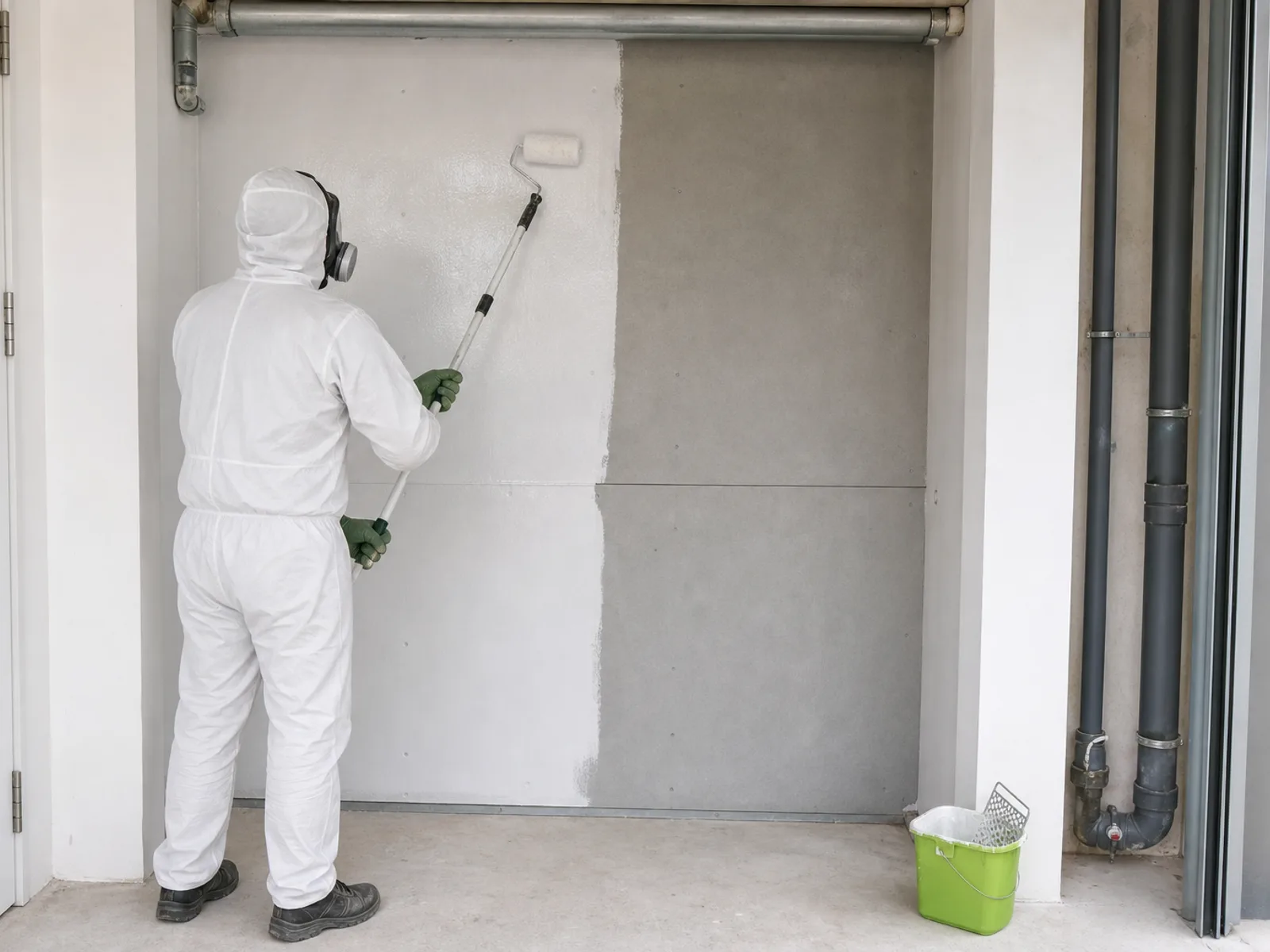
Encapsulation means sealing or enclosing asbestos so fibres cannot be released, then managing the material in place. Where the material is in good condition and will not be disturbed, it is frequently the correct answer — and at roughly £25 to £45 per square metre it is usually a great deal cheaper than removal.
Finding asbestos does not automatically mean removing it. That single point saves people more money than anything else on this website, and it is routinely missed.
Encapsulation is appropriate when all of the following hold:
- The material is in sound, undamaged condition
- It will not be disturbed by any planned work
- It sits somewhere that can be safely accessed for re-inspection
- A management plan and re-inspection schedule are practical to maintain
Typical cases: asbestos insulating board panels in a plant room that nobody enters, a textured ceiling in a room being redecorated rather than reconfigured, cement panels in a service cupboard, or boarding behind a fixed installation that would cost more to open up than to leave sealed.
When it is the wrong answer
Equally important, and a contractor willing to seal anything is not one to trust:
- The material is already damaged, friable or deteriorating
- The area is due for refurbishment or demolition — sealing it now just means paying twice
- It cannot be safely reached to inspect later, so the record will inevitably go stale
- It sits where it will inevitably be disturbed — a wall being chased for cables, a ceiling coming down
In those cases removal is the right route, and we will quote it that way.
What encapsulation costs
| Encapsulation type | Typical guide price | Suitable when |
|---|---|---|
| Seal or coat sound ACM | Around £25 – £45 per m² | Material is stable and can stay in situ |
| Enclosure or boarding over | Quoted by area | Sometimes better than stripping a ceiling |
| Label, manage and inspect | Often part of a management plan | Low-risk, undisturbed ACMs |
| Encapsulation versus removal advice | Free with a survey or quote | Deciding between the two |
Guide prices, excluding VAT unless stated. Full costs across every service are on the prices page.
Against licensed removal of the same material — which carries enclosure, 14 days' HSE notification, air monitoring and clearance testing — encapsulation is often cheaper by a wide margin. That gap is the reason it deserves a proper look rather than a default assumption that everything must come out.
What the work involves
- Condition assessment first. Nothing is sealed until the material has been assessed, usually via a survey or sampling.
- Surface preparation, appropriate to the material and without disturbing it.
- An appropriate encapsulant applied — a coating that binds the surface and prevents fibre release, or physical enclosure by boarding over.
- Labelling, so anyone working on the building afterwards knows what is behind the surface.
- Recording the location and condition in your asbestos register.
- A re-inspection interval set, appropriate to the material and its setting.
Steps 4 to 6 are the ones that matter most in the long run, and the ones most often skipped. An encapsulated material nobody recorded is a trap for the next person who drills into that wall.
Encapsulation for landlords and duty holders
If you manage non-domestic premises you carry the duty to manage under CAR 2012. That duty does not require removal — it requires you to know what is present, assess the risk, decide on a course of action, record it, and keep it current.
Encapsulation fits that framework well. It is a defensible decision provided the assessment supports it and the record is maintained. What is not defensible is sealing material without assessment, or sealing it and never looking at it again.
Where a re-inspection shows the encapsulation has been damaged, the decision gets revisited — that is the system working as intended. Where removal eventually follows, clearance air testing provides the evidence for reoccupation.
Frequently Asked Questions
Encapsulation questions
Is encapsulation as safe as removal?
How much cheaper is it than removal?
Does encapsulated asbestos have to be declared when selling?
How often does it need re-inspecting?
Can Artex be encapsulated?
What if the encapsulation gets damaged later?
Official guidance
- HSE — The duty to manage asbestoswhat the duty actually requires
- HSE — Asbestos surveysconfirming whether sealing is appropriate
- Control of Asbestos Regulations 2012the governing regulations
- HSE — Asbestosmanaging asbestos in buildings
External links open in a new tab. None of these organisations sell asbestos services.
Ask whether encapsulation suits your building
Tell us what the material is, where it is, what condition it is in and whether any work is planned nearby. We will tell you honestly whether sealing is appropriate — and quote removal instead if it is not.
Quotes are free and carry no obligation.
Related services and areas
- Asbestos SurveysManagement and refurbishment/demolition surveys to identify ACMs.
- Asbestos RemovalSafe, controlled removal of licensed and non-licensed materials by trained operatives.
- Artex & Textured Coating RemovalSafe removal of asbestos-containing textured coatings from ceilings and walls.
- PricesWhat surveys, removal and disposal typically cost.
- Areas We CoverPortsmouth, Hampshire and West Sussex.
- All ServicesThe full range, start to finish.

Ready to Get Started?
Ready to Deal with Asbestos Safely?
Get a clear quote today or speak to our team now. We’ll guide you through the process and make sure everything is handled correctly.